
29-06-2026
ZATCA Fatoorah API Integration Saudi Arabia (2026): Complete Developer Guide to Clearance, Reporting, CSID, and Phase 2 Compliance
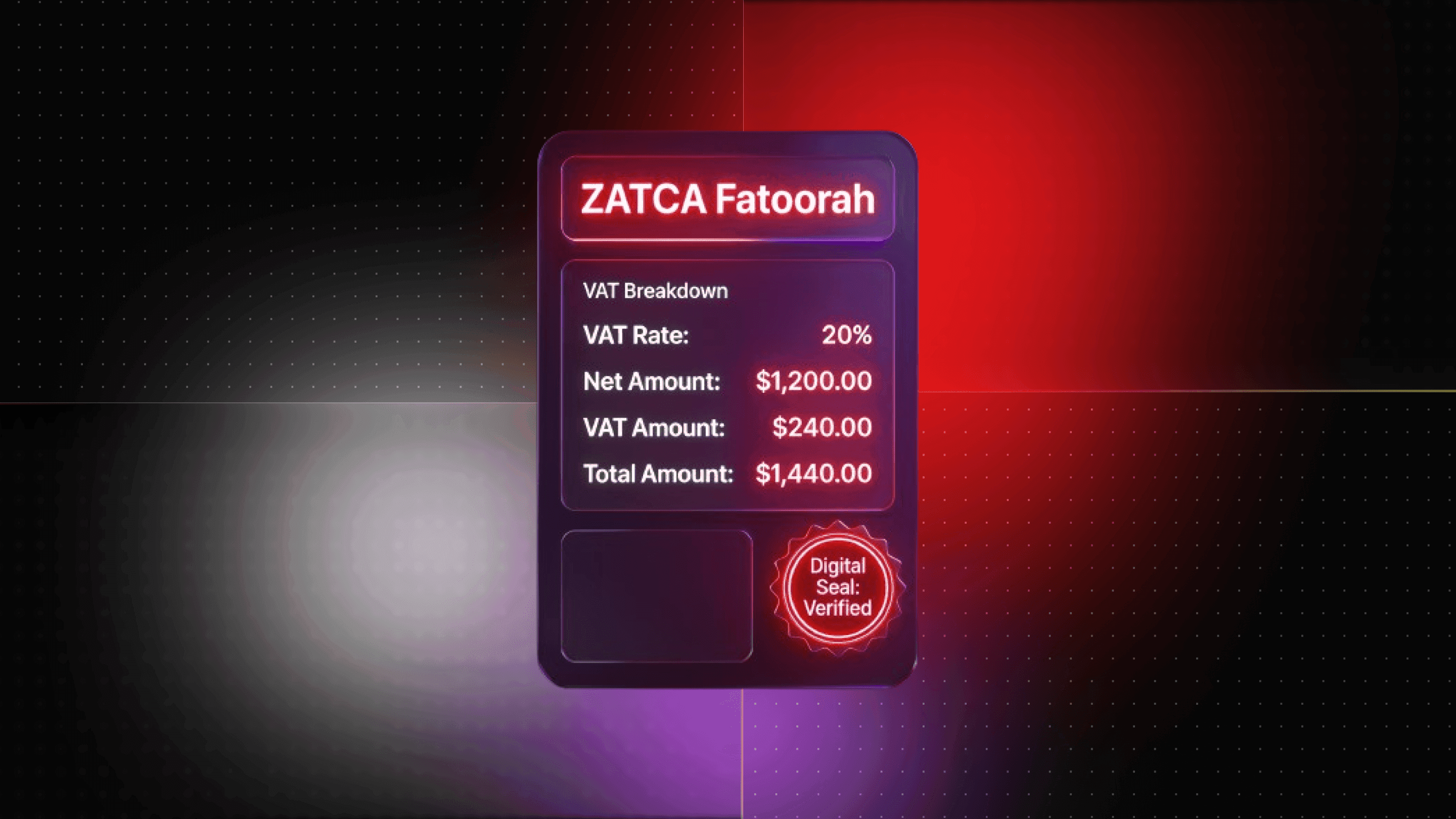
Saudi Arabia's e-invoicing journey has moved far beyond generating PDF invoices.
Today, every business subject to ZATCA Phase 2 must connect its invoicing software directly to the ZATCA Fatoorah platform, cryptographically sign invoices, generate compliant XML, communicate with government APIs, and maintain strict security controls throughout the invoicing lifecycle.
Many businesses assume installing an ERP plugin or enabling a POS extension is enough.
It rarely is.
Whether you're building a retail POS, ERP, billing platform, logistics system, hospitality platform, healthcare application, or e-commerce solution, ZATCA integration is ultimately a software architecture challenge—not simply an accounting feature.
At LogioLegion, we build custom ZATCA-integrated software using React Native, Next.js, Node.js, and Laravel for businesses across Saudi Arabia. Our systems integrate directly with the Fatoorah APIs while supporting Arabic-first workflows, multi-branch operations, and enterprise-grade compliance.
If you're unfamiliar with the broader regulatory framework behind Saudi software, read our guide on ZATCA-compliant app development Saudi Arabia first. This article focuses specifically on the developer side of Fatoorah API integration.
What ZATCA Phase 2 Actually Requires From Your Software
Many businesses still think Phase 2 simply means:
- generating XML invoices,
- printing QR codes,
- and uploading invoices to ZATCA.
That description misses most of the engineering work.
Phase 2 requires every invoice to move through a secure cryptographic workflow before it reaches the customer.
Your software must generate invoice XML using the required UBL 2.1 structure, digitally sign the invoice using cryptographic certificates, hash invoice data correctly, create the required QR payload, communicate with ZATCA's Fatoorah APIs, receive validation responses, store audit records, and maintain sequential invoice integrity.
This is significantly more complex than traditional invoicing systems.
Understanding the ZATCA Fatoorah Platform
The Fatoorah Platform is ZATCA's electronic invoicing infrastructure.
Every compliant invoicing solution communicates with this platform using secured REST APIs.
The platform validates invoices, verifies cryptographic signatures, issues clearance responses where required, accepts reporting submissions, and records invoice status for compliance monitoring.
Unlike conventional tax reporting systems where invoices are submitted monthly or quarterly, ZATCA expects software to communicate continuously with government infrastructure throughout daily business operations.
That requirement fundamentally changes how Saudi business software must be designed.
The Two Invoice Categories Every Developer Must Understand
Before writing any integration code, developers must understand that Saudi Arabia separates invoices into two different compliance workflows.
Standard Tax Invoices (B2B)
Business-to-business invoices follow the Clearance workflow.
These invoices must be transmitted to ZATCA before being shared with the customer.
The Fatoorah platform validates the invoice, applies its clearance response, and returns the approved invoice to the business.
Only then can the invoice be issued.
Because clearance occurs before invoice delivery, software must be designed to wait for ZATCA's approval before finalising the transaction.
This affects checkout logic, ERP workflows, invoice printing, warehouse dispatch timing, and customer communication.
Simplified Tax Invoices (B2C)
Business-to-consumer invoices follow the Reporting workflow.
These invoices are issued immediately to customers.
The software then submits them to ZATCA within the required reporting window.
Although reporting occurs after issuance, the invoice must still satisfy all cryptographic requirements before submission.
The software therefore performs nearly identical preparation work compared to clearance invoices.
Only the submission sequence changes.
Why This Difference Matters Architecturally
Many businesses mistakenly assume the difference between clearance and reporting is merely administrative.
It is not.
Clearance requires synchronous communication.
Reporting allows asynchronous communication.
That distinction changes:
- checkout behaviour,
- invoice generation timing,
- API retry logic,
- user experience,
- offline handling,
- and failure recovery strategies.
Retail POS software often reports simplified invoices.
Wholesale ERP systems usually clear standard invoices.
Many enterprise platforms need both simultaneously.
Your software architecture must support both workflows from the beginning rather than treating one as an afterthought.
The Complete Invoice Lifecycle
Every compliant invoice passes through multiple technical stages before becoming legally valid.
A typical invoice lifecycle includes:
- Business transaction occurs.
- Invoice XML is generated.
- Mandatory fields are validated.
- Invoice hash is created.
- Cryptographic signature is applied.
- QR code payload is generated.
- Clearance or Reporting API is called.
- ZATCA validates the invoice.
- Response is stored.
- Audit records are maintained.
Every step depends on the previous one.
Skipping or incorrectly implementing any stage causes invoice rejection.
Why Generic Accounting Plugins Often Fail
Many software vendors advertise "ZATCA integration."
In reality, they often provide:
- QR code generation,
- XML exports,
- or partial invoice templates.
That is not full Fatoorah integration.
Real compliance requires software capable of handling:
- cryptographic certificates,
- secure key storage,
- production CSID authentication,
- invoice hashing,
- digital signatures,
- API authentication,
- retry mechanisms,
- clearance workflows,
- reporting workflows,
- response validation,
- audit logging,
- and certificate lifecycle management.
This is why many businesses eventually move from generic plugins to custom integration once invoice volumes increase or operational complexity grows.
Why Fatoorah Integration Is Different From Typical API Integrations
Most APIs simply exchange information.
The Fatoorah platform performs regulatory validation.
Every request is evaluated against:
- invoice structure,
- mandatory fields,
- cryptographic integrity,
- certificate validity,
- business rules,
- tax calculations,
- document sequencing,
- and security compliance.
Your application is not merely exchanging data with another system.
It is communicating with Saudi Arabia's national tax infrastructure.
That demands much higher engineering standards than traditional third-party integrations.
The Six Core Fatoorah APIs Every Developer Must Implement
Every ZATCA-compliant invoicing solution revolves around a small number of APIs.
Although supporting services exist, these six endpoints form the backbone of every successful Phase 2 integration.
Understanding their purpose before development prevents major architectural mistakes later.
1. Compliance CSID API
Every integration begins here.
The Compliance CSID (Cryptographic Stamp Identifier) is issued after your onboarding process and allows your software to communicate with ZATCA's sandbox environment.
Think of it as your application's temporary identity during testing.
Before any invoice can be validated, your application must authenticate using the Compliance CSID.
This stage allows developers to:
- validate invoice generation,
- test XML structures,
- verify digital signatures,
- confirm invoice hashing,
- and complete onboarding exercises before requesting production approval.
Without a valid Compliance CSID, none of the remaining APIs can be tested successfully.
2. Production CSID API
After successful onboarding, ZATCA issues the Production CSID.
This replaces the sandbox credentials and allows software to submit legally valid production invoices.
The Production CSID represents your live software identity.
Every production request depends on it.
Because these certificates authorise tax transactions, they must be stored securely using proper certificate management rather than being embedded directly into application code.
Compromised production certificates create serious compliance risks.
3. Clearance API
The Clearance API processes Standard Tax Invoices (B2B).
The invoice is submitted before being issued.
ZATCA performs validation and returns an approved version if the invoice satisfies all regulatory requirements.
Your application should never assume clearance will always succeed.
Instead, it should gracefully handle:
- validation failures,
- authentication errors,
- temporary outages,
- certificate issues,
- malformed XML,
- duplicate invoices,
- and network interruptions.
A resilient clearance workflow protects daily business operations.
4. Reporting API
The Reporting API handles Simplified Tax Invoices (B2C).
Unlike clearance, these invoices are issued immediately to customers.
The software then reports them to ZATCA within the required reporting period.
Although operationally simpler, reporting still requires:
- compliant XML,
- cryptographic signatures,
- invoice hashes,
- QR code generation,
- certificate authentication,
- and secure API communication.
Developers should never treat Reporting as a "lighter" integration.
The compliance requirements remain almost identical.
5. Compliance Checks API
During onboarding, developers repeatedly validate invoices before requesting production approval.
The Compliance Checks API evaluates whether generated invoices satisfy ZATCA's technical specifications.
This allows engineering teams to identify:
- XML schema errors,
- incorrect invoice fields,
- tax calculation mistakes,
- hash inconsistencies,
- invalid digital signatures,
- certificate issues,
- and structural validation failures.
Running compliance validation continuously during development dramatically reduces production deployment delays.
6. Onboarding API
The onboarding process itself involves dedicated APIs responsible for registering invoice generation systems with ZATCA.
These APIs connect your Electronic Invoice Generation Solution (EGS) to the government infrastructure.
Successful onboarding includes:
- certificate requests,
- cryptographic key exchange,
- onboarding validation,
- compliance verification,
- and eventual production authorisation.
Skipping or rushing onboarding usually creates weeks of unnecessary delays later.
Understanding CSID: The Certificate Every Developer Talks About
One of the most misunderstood concepts in ZATCA integration is the CSID.
Developers often describe it as an API key.
That comparison is inaccurate.
A CSID is much closer to a digital identity certificate than a password.
It proves that your invoice generation system has been recognised by ZATCA.
What Is a Compliance CSID?
The Compliance CSID exists only for testing.
It allows developers to generate sample invoices, validate XML structures, and complete onboarding requirements without issuing legally valid production invoices.
Every development team begins here.
This stage is where integration quality is determined.
Teams that rush through sandbox testing typically experience far more production failures later.
What Is a Production CSID?
Once onboarding is complete, ZATCA issues a Production CSID.
This certificate authorises real invoice submissions.
Every production invoice sent through Clearance or Reporting uses this certificate to establish trust between your software and the Fatoorah platform.
Losing control of Production CSIDs creates significant operational and compliance risks.
Why Secure Certificate Management Matters
Production certificates should never be treated like ordinary configuration files.
Best practice includes:
- encrypted certificate storage,
- restricted administrative access,
- hardware-backed key protection where possible,
- automated certificate lifecycle monitoring,
- secure backup procedures,
- and detailed audit logging.
Large organisations often dedicate separate infrastructure specifically for certificate management because every production invoice depends on these credentials remaining secure.
Common Developer Mistakes During API Integration
Many implementation failures have surprisingly little to do with API programming itself.
Instead, they originate from incorrect assumptions about compliance workflows.
Typical mistakes include:
- treating CSIDs like API passwords,
- generating invoices before signing them,
- incorrect XML namespaces,
- invalid invoice sequencing,
- failing to retry temporary API failures,
- storing certificates insecurely,
- ignoring hash validation,
- and testing only successful invoice scenarios.
A robust ZATCA integration plans for failure handling just as carefully as successful submissions.
That resilience is what separates production-ready invoicing software from systems that repeatedly fail under real business conditions.
Clearance vs Reporting: The Most Important Architectural Decision
Every ZATCA integration eventually revolves around one question:
Does this invoice require Clearance or Reporting?
Many failed implementations originate from misunderstanding this distinction.
It affects API selection, user experience, business workflows, retry strategies, and even how invoices are stored inside the ERP or POS.
Clearance Workflow (Business-to-Business)
Clearance applies to Standard Tax Invoices issued between VAT-registered businesses.
The sequence is strict.
- Business transaction occurs.
- Invoice XML is generated.
- Invoice is digitally signed.
- Clearance API is called.
- ZATCA validates the invoice.
- Approved invoice is returned.
- Customer receives the cleared invoice.
Notice what happens here.
The customer does not receive the invoice until ZATCA approves it.
That means your software must wait for the government response before completing the invoice issuance process.
Reporting Workflow (Business-to-Consumer)
Reporting applies to Simplified Tax Invoices.
The sequence is different.
- Business transaction occurs.
- Invoice XML is generated.
- Invoice is digitally signed.
- Customer immediately receives the invoice.
- Reporting API sends the invoice to ZATCA.
- Submission response is stored for audit purposes.
Here, the customer experience remains fast because invoice delivery is not blocked by government validation.
However, reporting deadlines must still be respected.
Failure to submit invoices within the required timeframe creates compliance exposure.
Why Developers Must Build Both Workflows
Many Saudi businesses issue both invoice types every day.
Consider a distributor.
When selling to another VAT-registered company, Clearance is required.
When selling directly to walk-in consumers, Reporting applies.
The same software therefore needs to determine invoice type automatically before deciding which API workflow to execute.
Trying to retrofit dual-workflow support later often requires major architectural changes.
Designing for Offline Scenarios
One overlooked challenge is internet connectivity.
Retail stores, warehouses, mobile sales teams, and remote locations occasionally lose connectivity.
Your application must define what happens when communication with ZATCA becomes temporarily unavailable.
For Reporting invoices, queued submission strategies may be appropriate.
For Clearance invoices, however, the software must carefully manage pending transactions because invoices cannot legally be issued before clearance.
Offline behaviour should be designed intentionally rather than discovered during production.
Error Handling Matters More Than Successful Requests
Many development teams only test ideal scenarios.
Production systems spend much more time handling unexpected conditions.
Examples include:
- temporary API downtime,
- certificate expiry,
- network interruptions,
- malformed invoice XML,
- duplicate submissions,
- invalid signatures,
- incorrect tax calculations,
- and timeout responses.
A production-ready invoicing platform should automatically detect, classify, retry, and log these failures without disrupting daily business operations.
The Five-Step ZATCA Integration Process
Although every project differs slightly, successful integrations generally follow the same structured implementation roadmap.
Skipping stages almost always increases deployment time later.
Step 1 — Compliance Assessment
Before writing any code, determine exactly how the business operates.
Important questions include:
- Which invoice types are issued?
- B2B, B2C, or both?
- Multiple branches?
- ERP or POS?
- Existing accounting software?
- Expected invoice volume?
- Integration with payment gateways?
- Existing ZATCA wave assignment?
These answers influence the entire software architecture.
Step 2 — Sandbox Development
Development begins inside the Compliance environment.
During this phase developers:
- generate XML invoices,
- implement invoice hashing,
- configure digital signatures,
- validate QR payloads,
- integrate authentication,
- and repeatedly test against Compliance APIs.
This is where most implementation problems should be discovered—not after production deployment.
Step 3 — Onboarding and Certification
After sandbox validation, onboarding documentation is submitted to ZATCA.
The onboarding process includes:
- compliance verification,
- certificate issuance,
- invoice validation,
- technical testing,
- and Production CSID approval.
Only after successful completion can production invoices legally flow through the Fatoorah platform.
Step 4 — Production Deployment
Production deployment involves considerably more than changing API endpoints.
Teams must verify:
- secure certificate storage,
- production authentication,
- monitoring,
- logging,
- alerting,
- disaster recovery,
- backup procedures,
- and operational documentation.
A controlled rollout minimises disruption to ongoing business operations.
Step 5 — Continuous Compliance Maintenance
ZATCA compliance does not end after deployment.
Software requires ongoing maintenance as regulations evolve.
Businesses should continuously monitor:
- certificate validity,
- API updates,
- schema revisions,
- cryptographic requirements,
- software patches,
- security vulnerabilities,
- and regulatory announcements.
Treating compliance as an ongoing operational responsibility significantly reduces long-term risk.
Why Custom Integration Usually Becomes Necessary
Businesses often begin with generic accounting software or simple ERP plugins.
That approach works while invoicing remains relatively straightforward.
As operations expand, requirements quickly become more complex.
Examples include:
- multiple legal entities,
- hundreds of branches,
- ERP integrations,
- e-commerce platforms,
- warehouse management,
- POS synchronisation,
- healthcare billing,
- logistics invoicing,
- franchise operations,
- or hospitality systems.
At this stage, businesses typically need invoicing workflows tailored to their operational model rather than forcing operations to fit generic software limitations.
That is why many growing organisations eventually invest in custom ZATCA-integrated platforms built specifically around their business processes instead of relying on disconnected compliance plugins.
The cost of integrating the ZATCA Fatoorah API depends on three primary factors:
- the complexity of your existing software,
- the number of invoices processed,
- and the number of business systems involved.
A standalone POS system requires significantly less engineering than a nationwide ERP connected to warehouses, e-commerce platforms, and multiple legal entities.
Typical project ranges include:
| Business Type | Estimated Cost (SAR) | Timeline |
|---|---|---|
| POS Integration | SAR 20,000–50,000 | 2–4 weeks |
| ERP Integration | SAR 60,000–180,000 | 4–10 weeks |
| Enterprise Multi-System Integration | SAR 180,000–500,000+ | 8–20 weeks |
Projects involving multiple branches, franchise operations, healthcare systems, logistics platforms, or manufacturing ERP environments generally require more extensive planning because invoice generation is distributed across several operational systems.
Common Mistakes Businesses Make During Integration
Many implementation failures are avoidable.
The most common issues include:
Starting Too Late
Some businesses begin preparing only after receiving their ZATCA wave notification.
This creates unnecessary time pressure because certificate onboarding, testing, and production deployment all require time.
Choosing the Wrong Architecture
Treating compliance as an isolated plugin instead of integrating it into the core invoicing workflow often leads to duplicated invoices, reconciliation issues, and poor user experience.
Compliance should be part of the transaction lifecycle—not an afterthought.
Ignoring Security
Certificates, signing keys, and authentication credentials are highly sensitive.
Storing them insecurely, embedding them in application code, or sharing them across environments increases security risks and can compromise compliance.
Underestimating Maintenance
Many organisations assume the project ends after production deployment.
In reality, software must continue adapting to:
- regulatory updates,
- certificate renewals,
- API changes,
- schema revisions,
- and evolving cybersecurity requirements.
Long-term maintenance should be included in project planning from the beginning.
Why Businesses Choose LogioLegion
At LogioLegion, we build custom ZATCA-compliant software for businesses operating across Saudi Arabia.
Rather than offering generic plugins, we design integrations around the way each organisation actually works.
Our development expertise includes:
- Custom ERP integration
- POS software integration
- Laravel development
- Node.js backend systems
- React Native mobile applications
- Next.js web platforms
- Multi-branch business management software
- Warehouse and logistics systems
- Healthcare software
- Manufacturing platforms
- Hospitality systems
- Marketplace platforms
- API-first software architecture
Our approach focuses on building maintainable systems that automate invoicing while supporting the operational workflows unique to each business.
Whether you're integrating ZATCA into an existing ERP, modernising a legacy invoicing system, or developing an entirely new platform, our team designs solutions that align with Saudi regulatory requirements from the outset.
Final Thoughts
ZATCA Fatoorah API integration is far more than connecting software to a government endpoint.
It requires secure certificate management, XML generation, cryptographic signing, QR code creation, API authentication, Clearance and Reporting workflows, production monitoring, and ongoing regulatory maintenance.
Businesses that treat compliance as a strategic software capability avoid costly rewrites, reduce operational risk, and simplify future regulatory updates.
As Saudi Arabia continues expanding its digital tax ecosystem, organisations with well-designed ZATCA-integrated software will be better positioned to adapt quickly while maintaining uninterrupted business operations.
If you're planning a new ERP, POS system, e-commerce platform, or custom business application requiring ZATCA integration, the right software architecture from day one makes compliance significantly easier throughout the life of the system.
Ready to integrate your software with the ZATCA Fatoorah API?
Book a free discovery call with LogioLegion to discuss your existing systems, compliance requirements, and receive a fixed project estimate for your ZATCA integration.
Continue Reading
Discover our full range of services - from custom software development to complete marketing solutions

Building an E-commerce App for Saudi Arabia in 2026: Arabic UX, Mada Payments, and Logistics APIs
A complete Saudi Arabia e-commerce app development guide covering Arabic RTL UX, Mada integration, ZATCA compliance, Saudi logistics APIs, AI features, and platform costs for 2026.

Custom Loyalty Program App Development Saudi Arabia: The ZATCA-Compliant, Mada-Integrated Alternative to Enterprise Loyalty Platforms (2026)
Build a custom loyalty program app for Saudi Arabia with built-in ZATCA Phase 2 compliance, Mada payments, NAFATH identity verification, Arabic-first UX, and full IP ownership. Discover why custom loyalty software is the ideal alternative to enterprise platforms for Saudi retailers, restaurants, pharmacies, hotels, and financial services businesses in 2026.

Custom ZATCA POS Software Development Saudi Arabia: Wave 24 Compliance for SMEs
Prepare your Saudi business for ZATCA Wave 24. Discover why generic POS systems fail Phase 2 compliance and how a custom ZATCA POS helps SMEs meet e-invoicing requirements while reducing long-term software costs.

Gold and Jewellery Store POS and Inventory Management Software Development in Saudi Arabia: ZATCA Gold VAT Rules, Mada Integration, and Custom vs ERP (2026)
Saudi gold retailers face unique compliance challenges: investment gold VAT exemptions, jewellery VAT, Mada payments, AML checks, and ZATCA e-invoicing. Learn how custom POS and inventory software handles Saudi-specific requirements correctly.